
Even today, many writers continue to assess the horror and devastation brought by the German mass murder of the Jewish people in Europe in the late 1930s and early 1940s. Still, among all sources, letters written by those who perished in the Holocaust perhaps provide us with the most telling and poignant perspective of all. To us, the horrors of the Holocaust remain unimaginable, yet the letters were written by people who were not only able to ‘imagine’ these horrors, but who experienced them. Despite being written in the past, letters from the Holocaust still have a psychological impact on those who read them now, as they allow us to examine the psychological states of those who perished. Letters from the death camps offer horrifying first-hand accounts and they are also crucial historical evidence.
Long-term psychological consequences of the Holocaust can be seen in the lives of survivors around the world and those who want to examine the psychological states post-liberation can do so by hearing survivors’ tell their stories. However, people who were killed in the Holocaust are unable to share their stories–except through their letters. Shimshon Holcblatt, who was murdered in the Holocaust, wrote letters to his children after they were forced apart. In his last letter, he shared that he was not afraid of death:
“In a world of so much cruelty, with people whom we lived amongst and were friendly with for years, people who always smiled and now are willing to betray us – it is not worth living in such a world.”
https://www.yadvashem.org/yv/en/exhibitions/last-letters/1942/holcblati.asp
Someone reading this letter using a psychological lens would recognize that Shimshon Holcblatt is losing hope. Therefore, reading letters from those who were killed in the camps is arguably the best way to evaluate their psychological state in the camps.
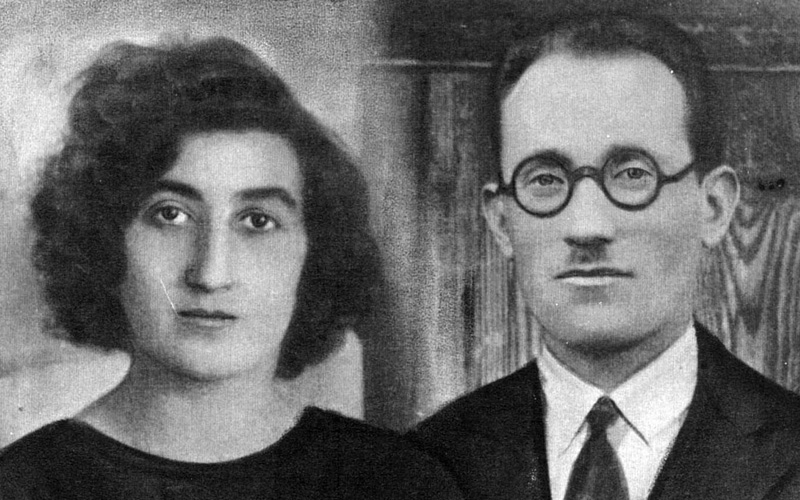
https://www.yadvashem.org/yv/en/exhibitions/last-letters/1942/holcblati.asp
Another reason letters prove unique in what they accomplish is that unlike any other type of source, letters can make the reader feel more deeply connected to the person about whom they are reading. Absorbing letters from those who were murdered in the camps can prove more difficult than just reading about the Holocaust. However, the intensity of the experience means the message resonates more profoundly with the reader.
The contemporary significance of Holocaust letters is probably far outweighed by their importance to their recipients and others who read them shortly after they were written. During the Holocaust, families were torn apart. Children were ripped away from parents, and parents from children. Husbands were ripped away from wives, and wives from husbands. Although families were forced apart (in a location sense), letters–when they got through–were the glue that kept them together. Letters gave people hope–hope that one day they will no longer be forced to write letters to each other, and rather be able to communicate in person. We see this in Holcblatt’s letter:
“The hope that we may still see you is the only thing giving us strength to hold on.”
https://www.yadvashem.org/yv/en/exhibitions/last-letters/1942/holcblati.asp
Of course, many letter writers created messages even knowing that they would in all likelihood never reach their intended readers. Perhaps writing the letters provided the only therapy one could find under such conditions.
Sometimes letters were used to send last goodbyes. For example, Holcblatt said in his last letter before being sent to a camp and killed:
“Unless a miracle suddenly occurs, our letter will reach you when we are no longer alive.”
https://www.yadvashem.org/yv/en/exhibitions/last-letters/1942/holcblati.asp
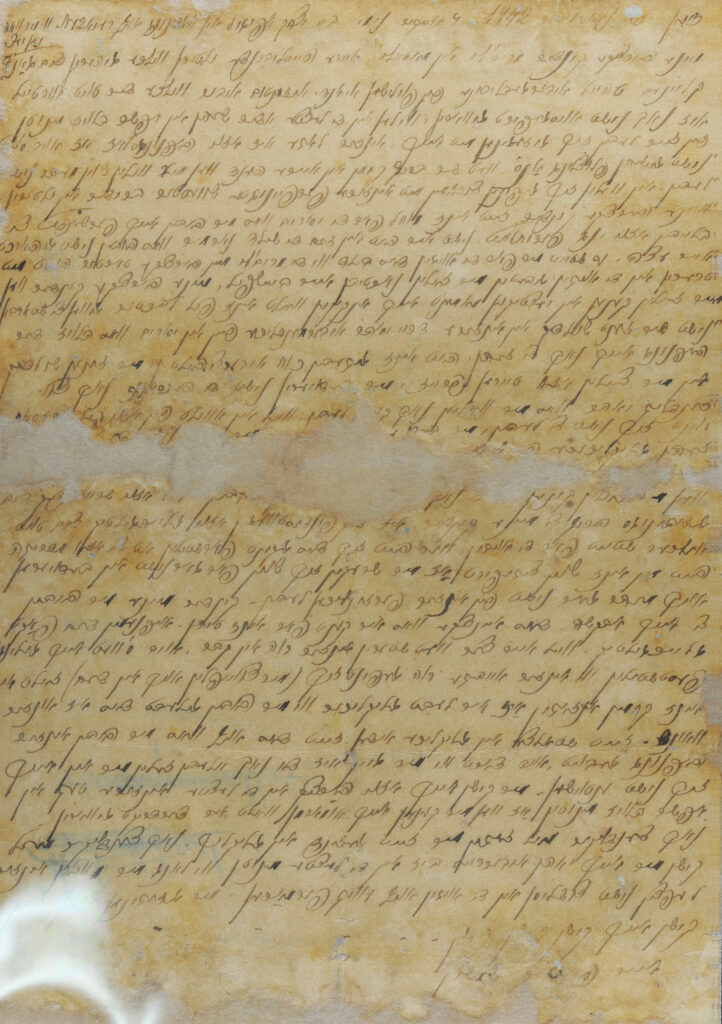
https://www.yadvashem.org/yv/en/exhibitions/last-letters/1942/holcblati.asp
To end his letter, to say his last goodbye, Holcblatt wrote:
In these last moments of our lives, we embrace you with all our heart. If we could hug you, you would be crushed by us…
We repeat another hundred times: be healthy and happy. We kiss you warmly dozens of times, without stopping, until the last minute, as long as our lips and eyes aren’t closed forever. We part from you and embrace…. embrace… embrace…
Your father, Shimshon
https://www.yadvashem.org/yv/en/exhibitions/last-letters/1942/holcblati.asp
Letters written by those who died in the camps were valuable then, and still are today. Back then, letters helped families communicate while also providing them with a sliver of hope. Sometimes, the letter-writing helped a person try to make sense of what was happening around them. Today, the spirit of those who died can be seen through their letters while also providing the reader with a distinct and powerful way to learn about the Holocaust.
